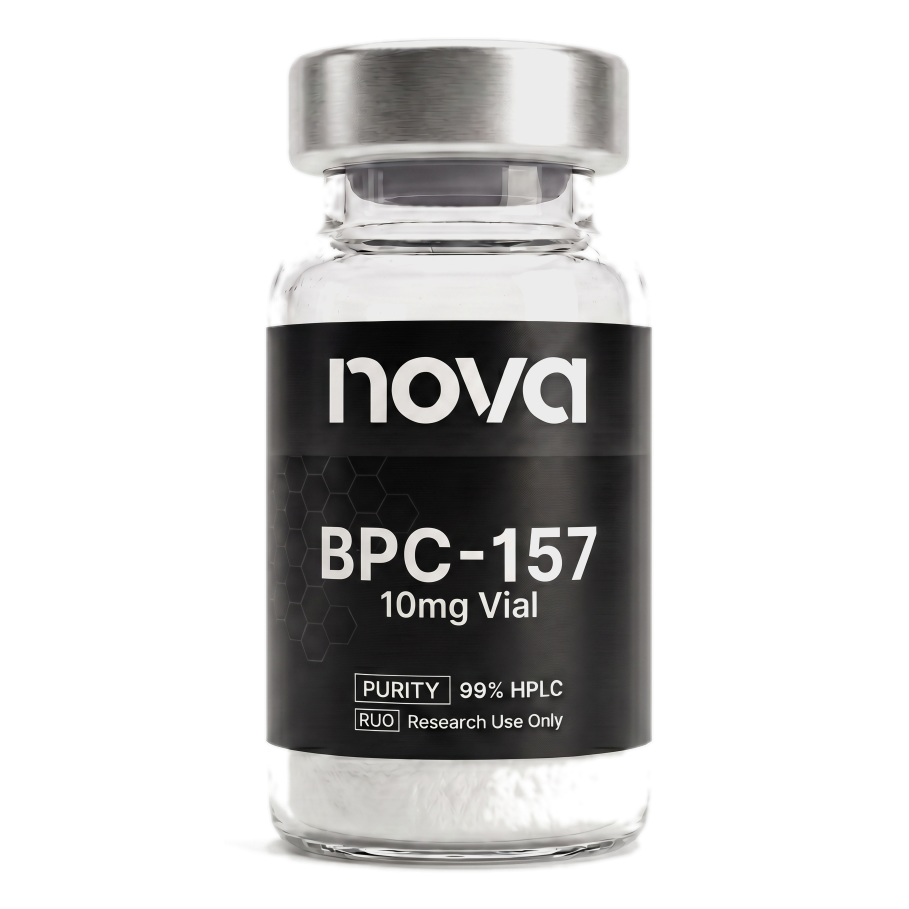
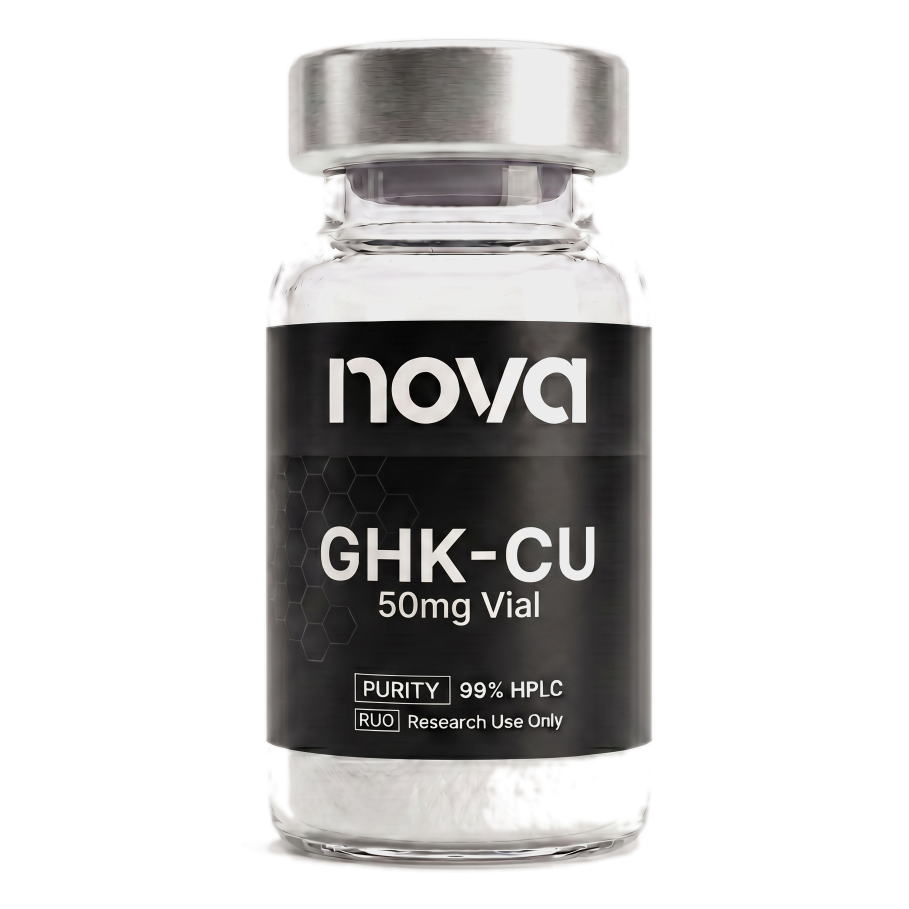
Are you 21
or older?
For laboratory and research use only. Not for human consumption.
Enter your vial strength and the bacteriostatic water you're adding. Get the exact concentration, the volume to draw on an insulin syringe, and how many draws each vial yields — instantly.
Your vial

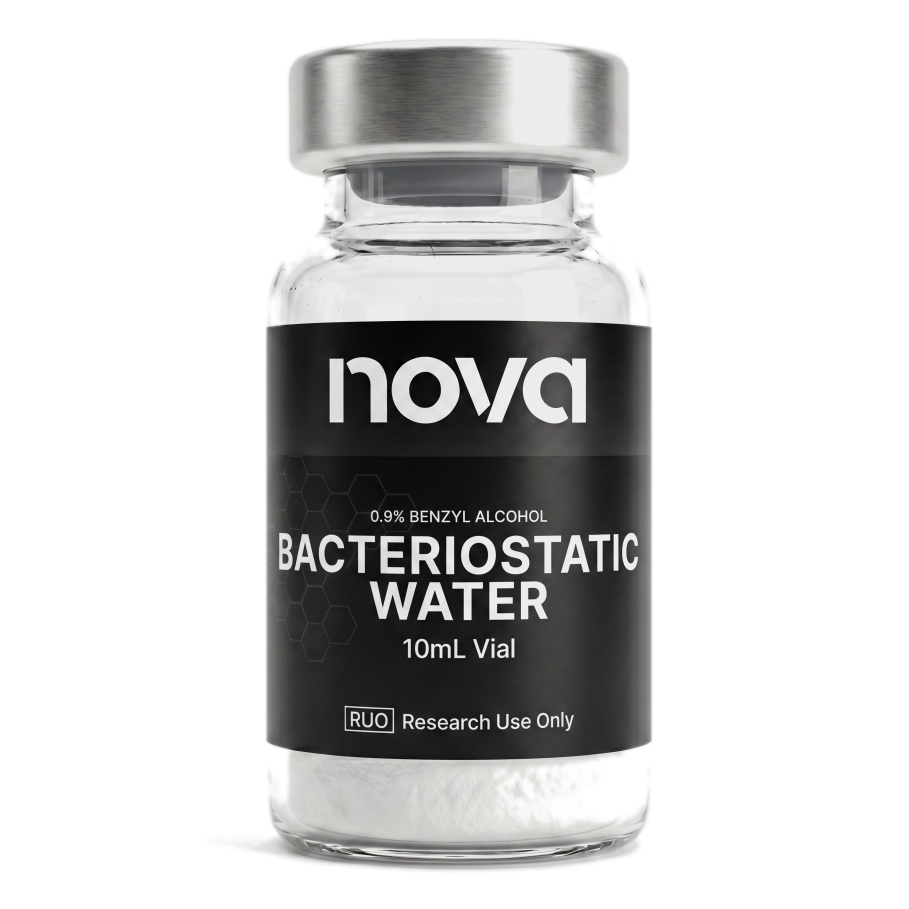
Every batch is HPLC + mass-spec tested by an independent U.S. lab, and the signed COA ships with your order.
Reconstitution is simple arithmetic once you know two numbers: how much peptide is in the vial, and how much bacteriostatic water you add.
Find the total peptide mass printed on the label — e.g. 10 mg. Every Novalabs vial lists it, and the batch ID matches the public COA.
More water gives a more dilute solution and finer measurement; less water means fewer units to draw. 2 mL is a common starting point.
The calculator converts your target amount into insulin-syringe units so you can measure it out precisely, every time.
Common vial-and-water combinations and the concentration each produces. The last column is the insulin-syringe draw for a 250 mcg target.
| Peptide in vial | BAC water | Concentration | Draw for 250 mcg |
|---|---|---|---|
| 5 mg | 2 mL | 2.5 mg/mL | 0.10 mL · 10 u |
| 10 mg | 2 mL | 5 mg/mL | 0.05 mL · 5 u |
| 10 mg | 3 mL | 3.33 mg/mL | 0.075 mL · 7.5 u |
| 15 mg | 3 mL | 5 mg/mL | 0.05 mL · 5 u |
| 20 mg | 2 mL | 10 mg/mL | 0.025 mL · 2.5 u |
U = units on a U-100 insulin syringe (100 units = 1 mL). Reconstitution math for research handling.
Enter the peptide amount in your vial (in mg) and the bacteriostatic water you're adding (in mL). The calculator instantly returns the concentration (mg/mL and mcg/mL), the volume to draw for your target amount, the matching units on a U-100 insulin syringe, and how many draws the vial yields.
There's no single correct amount — the water you add sets the concentration. More water gives a more dilute solution and finer measurement; less water means fewer units to draw for the same amount. 1–3 mL is a common range.
1 mg equals 1,000 mcg, so a 10 mg vial holds 10,000 mcg. The calculator converts automatically — switch your target between mg and mcg with one tap and the draw volume updates.
A U-100 insulin syringe holds 100 units per 1 mL, so 1 unit = 0.01 mL. The calculator converts your target amount into units on that scale, so "draw to 5 units" means 0.05 mL of your reconstituted solution.
No. The amount of peptide in the vial is fixed. Adding more water only changes the concentration — it spreads the same peptide across more liquid, so each unit on the syringe carries proportionally less.
Once in solution, most research peptides are kept refrigerated and protected from light. Follow the storage guidance on your product's Certificate of Analysis and documentation.
Also useful for: peptide dosage calculator · bacteriostatic water calculator · mg to mcg conversion · peptide mixing chart · how to reconstitute peptides · insulin unit calculator
For laboratory and research use only. Not for human consumption. This tool performs reconstitution and concentration math for research handling and inventory. It is not medical advice or dosing guidance. Always follow your institution's protocols.
Good on anything in the store. No minimum, code lands instantly.
99.67% average purity, lab-verified. See the reports
By subscribing you agree to receive marketing emails. One code per customer. Unsubscribe in one click, any time.
For laboratory and research use only · Not for human consumption
Welcome in — it applies itself at checkout. Order before 6PM ET and it ships today.
Welcome in — copy the code down first. Order before 6PM ET and it ships today.
For laboratory and research use only · Not for human consumption